.png)
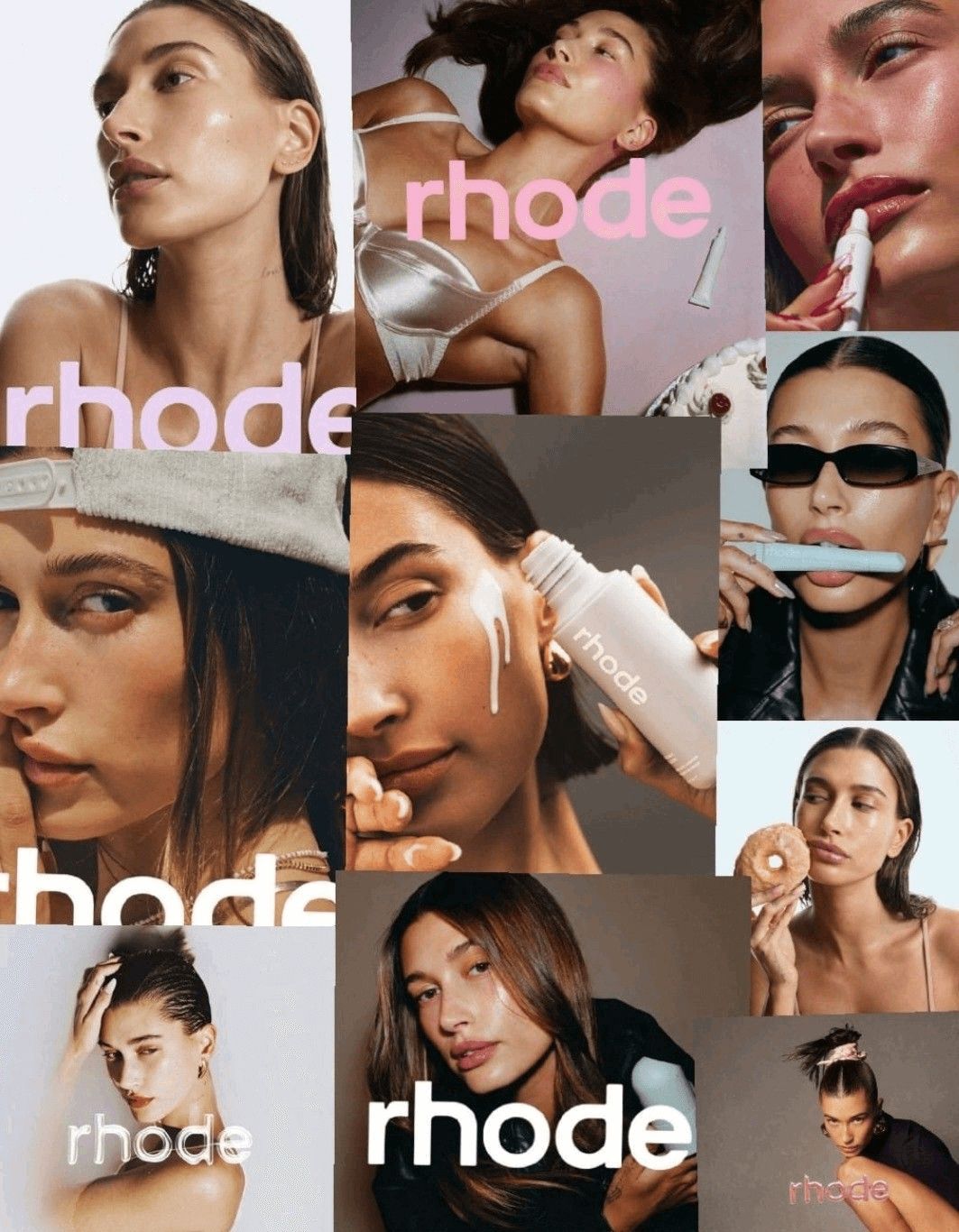
Rhode feels everywhere. Hailey Bieber's skincare brand dominates attention cycles. Every new product launch shifts focus from other beauty brands competing for the same audience.
First thought: celebrity founder explains everything. But that's lazy analysis. What can we learn from successful execution that's replicable regardless of celebrity attachment?
The numbers since Rhode launched in 2022:
- Eight-figure sales threshold crossed in 11 days (CEO Melanie Bender said she'd never seen anything like it)
- Peptide Glazing Fluid ($29 gel serum) drew 100,000-person waitlist at June 2022 launch
- Past restocks sold 36 units of glazing fluid every second
- October 2022: waitlist exceeded 1 million across products
- Nearly 50% of US e-commerce traffic is international despite zero active marketing outside US
Rhode's numbers are staggering. Can the brand thrive without Hailey Bieber's fanbase? Maybe not. But the team behind Rhode masterfully crafted every brand detail. These aesthetic elements and strategies helped grow fanbase beyond Bieber's existing audience.
Iconic packaging shape through minimal modification
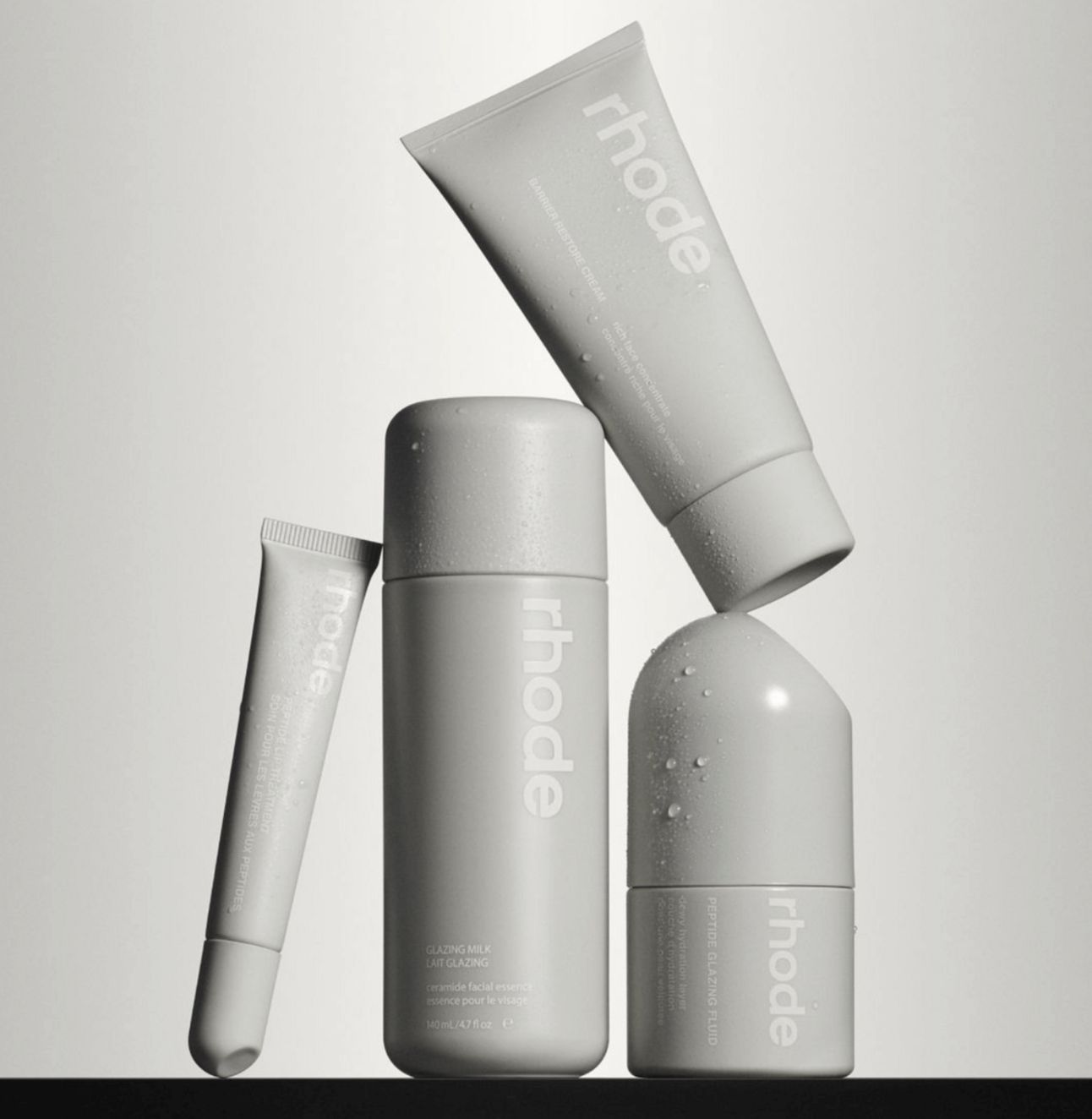
First thing making Rhode distinctive: packaging. Unique diagonal cut on cap became iconic feature. You recognize Rhode just by serum bottle silhouette.
Smart move: they didn't create completely new packaging shape. They made small change to the cap—the part requiring fewest technical modifications. This is crucial insight. Custom packaging doesn't mean redesigning entire bottle structure. Strategic detail modification creates recognizability while controlling production costs.
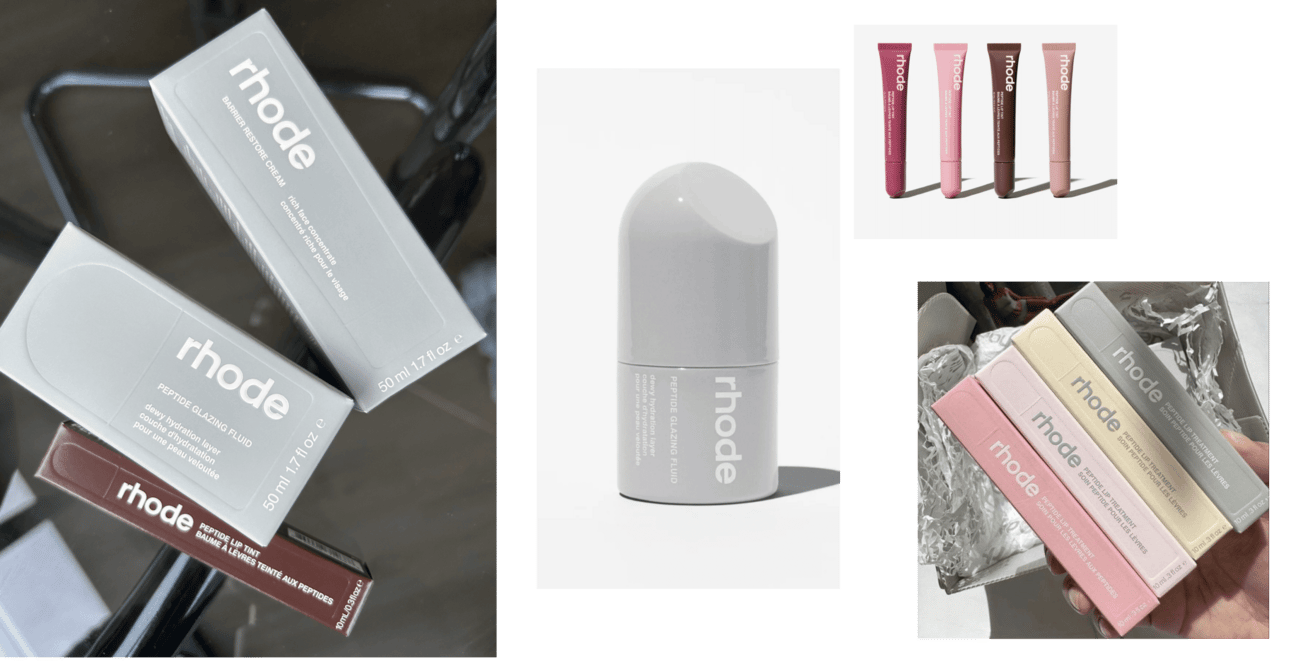
Next, let's focus on the paper packaging. The creative team has come up with a minimalist and elegant solution by designing an embossed silhouette of the bottles on top of the paper packaging. This gives it a minimal yet unique look. Rhode has continued to use this approach in their consistent brand identity.
Strategic Advice from Orchidea: For beauty brands with $30K+ packaging budgets, invest in one distinctive detail rather than complete custom mold. Rhode's diagonal cap costs fraction of full custom bottle but creates equal recognizability. Identify which packaging element appears most in user-generated content (usually cap or label), then make that element unmistakably yours.
Merchandise as advertising: phone case phenomenon
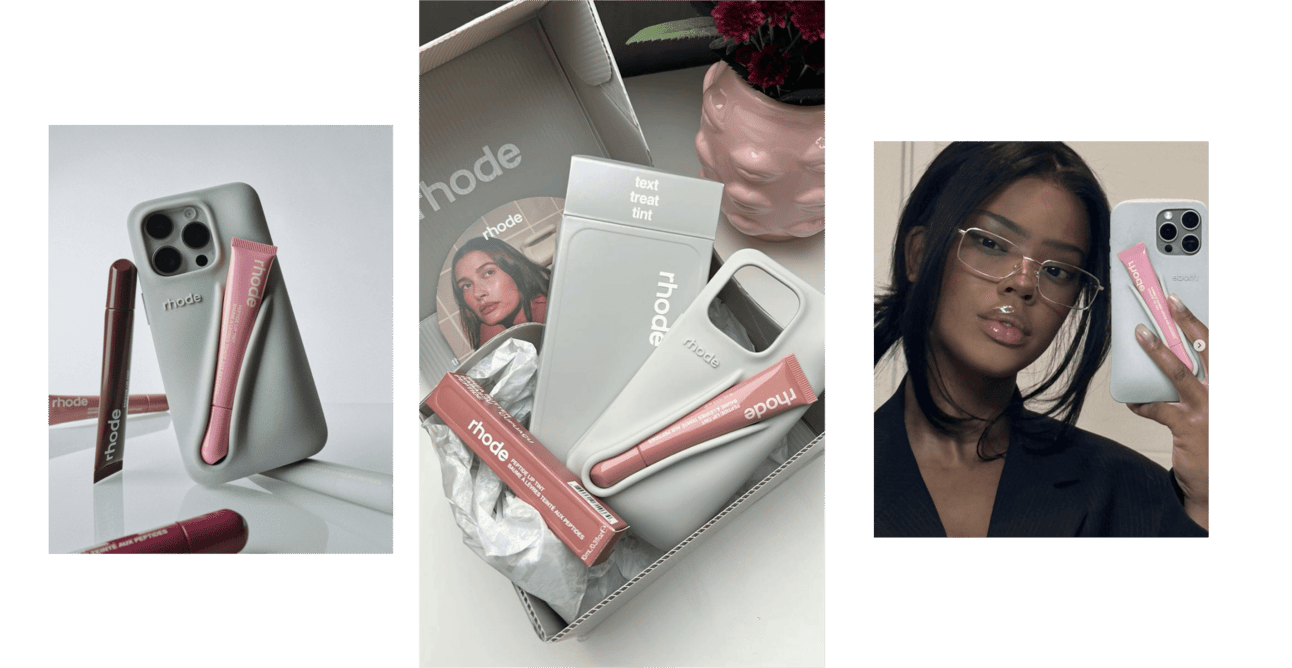
Rhode's phone case became legendary in beauty world. This was brilliant idea that turned customers into walking advertisements.
The phenomenon: people don't initially need your product. They crave attention from their audience. They'll spend money (within their means) to buy something making them feel special. Phone case for merchandise is particularly effective because it turns into free advertising. Every photo taken, every hand gesture in video, every coffee shop table shot includes brand visibility.
Cost to customer: affordable impulse purchase. Value to brand: constant visibility in customer's daily content creation. The phone becomes billboard for your brand.
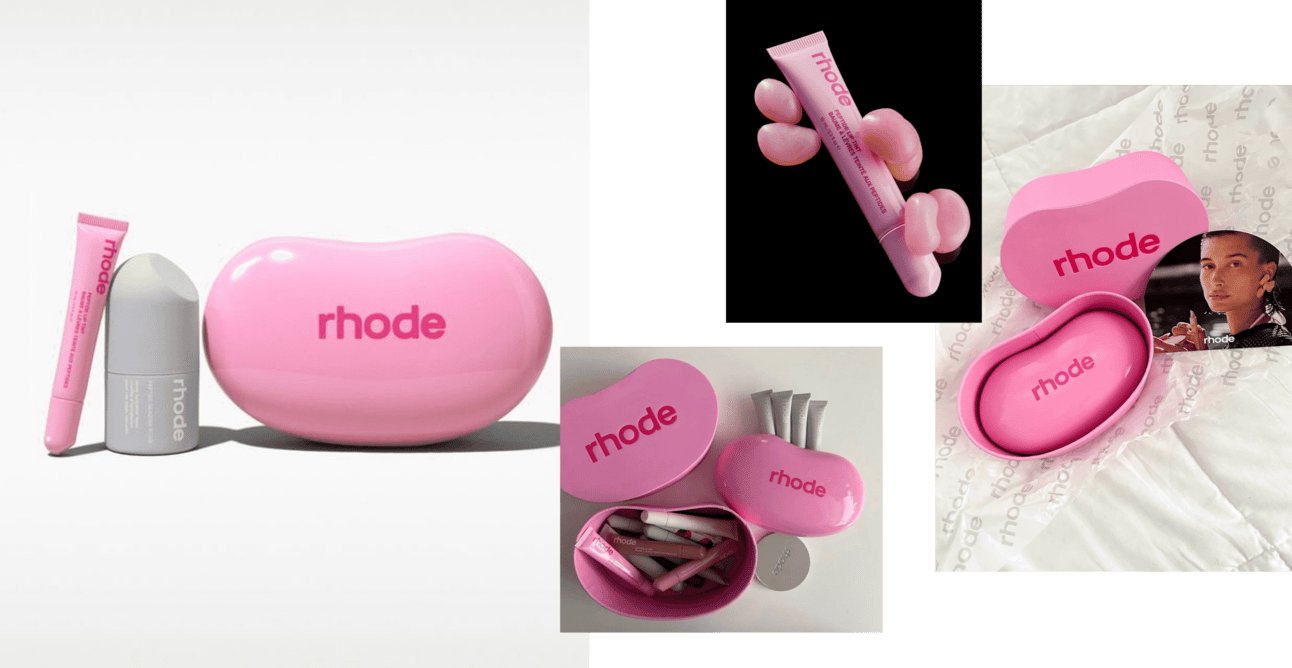
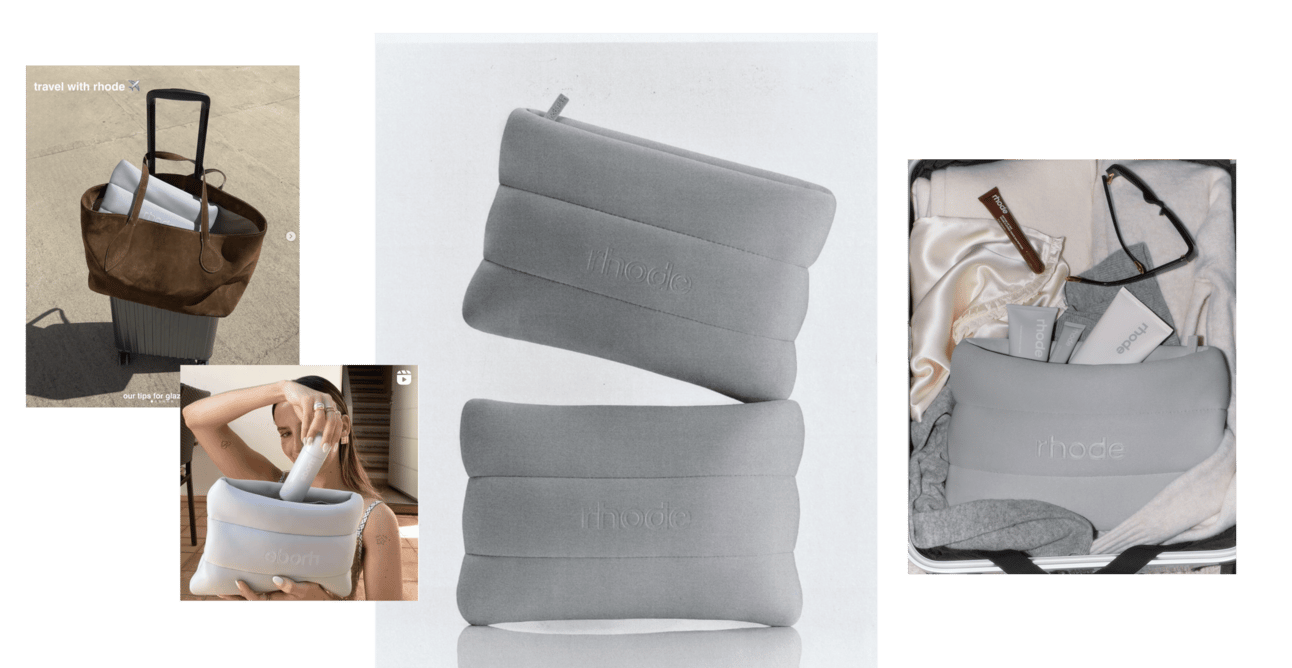
Another merchandise hit: cosmetic kits. Pink bean-shaped kits. Soft travel cosmetic kits that stimulate audience to create content while traveling (planes, airports, luggage shots). If you make merchandise fun, interesting, scroll-stopping, you win the user attention race.
Rhode understood: merchandise isn't promotional giveaway. It's content creation tool you sell to customers who want to participate in brand aesthetic.
Hard data: Rhode crossed eight-figure sales in 11 days, with Peptide Glazing Fluid selling 36 units per second during restocks. Waitlist exceeded 1 million despite launching only in 2022. Phone case merchandise strategy turned customers into constant brand advertisers across social platforms.
PR kits designed for influencer amazement
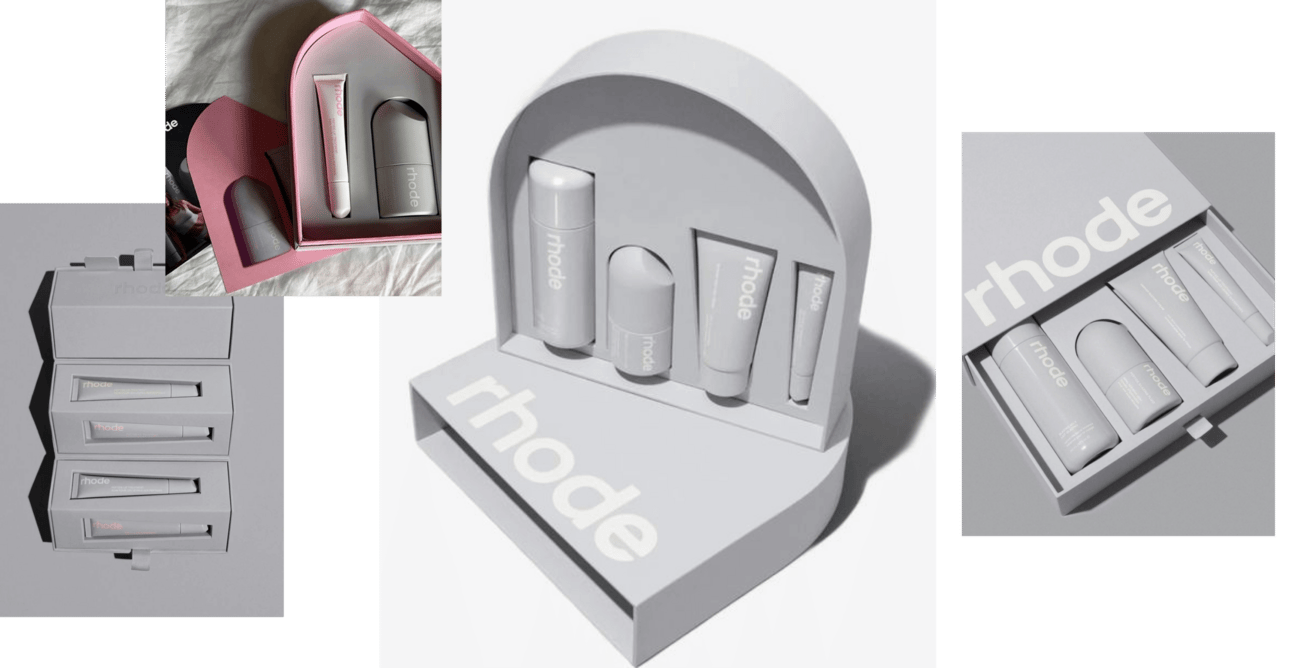
Newcomer brands heavily rely on influencers' first impressions. If you leave them amazed, you've hit the mark. Their audience takes notice and follows your brand.
Investing in unique packaging shape turns unboxing into captivating reel or TikTok moment. Sounds straightforward in theory. Many brands fail by creating ordinary PR kits. Rhode consistently impresses influencers with innovative offerings—creating "aha moment" for their audience.
First PR kits: greyish color, minimal style, creating foundation for brand aesthetic. Each time, Rhode's creative team invents interesting shapes and boxes you'd want to keep. Not disposable packaging. Keepable objects.
The strategy isn't just "make it pretty." It's "make it worth filming."
Storytelling through launch-specific ecosystems
Every Rhode product launch creates associated story ecosystem. Not just product announcement. Full thematic world.
Strawberry Lipstick launch: red Corvette, giant strawberry box, strawberry-flavored donuts, everything red and strawberry-themed. They provided tools for influencers to play with and create own content. Example: strawberry stickers. Production cost: $1-5 per unit (or less in large quantities). Value: gives fanbase small element to create content around.
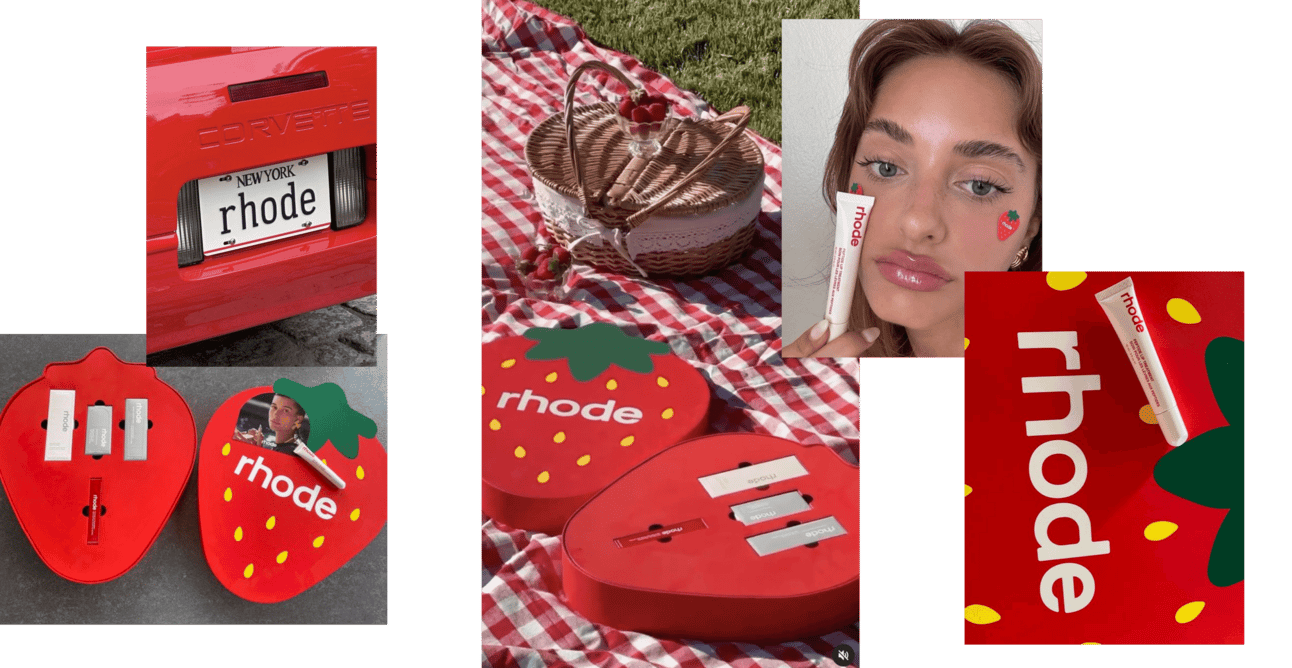
This is coherence. The product isn't separate from its story. The packaging IS the story. The campaign imagery reinforces the story. The influencer content tools continue the story. Everything points in same direction.
Common Mistake: Treating PR kits as product samples in nice boxes. Rhode treats PR kits as content creation toolkits. Difference: samples showcase product benefits. Toolkits enable audience participation in brand narrative. One creates awareness. Other creates community.
Hyperbolization for attention capture
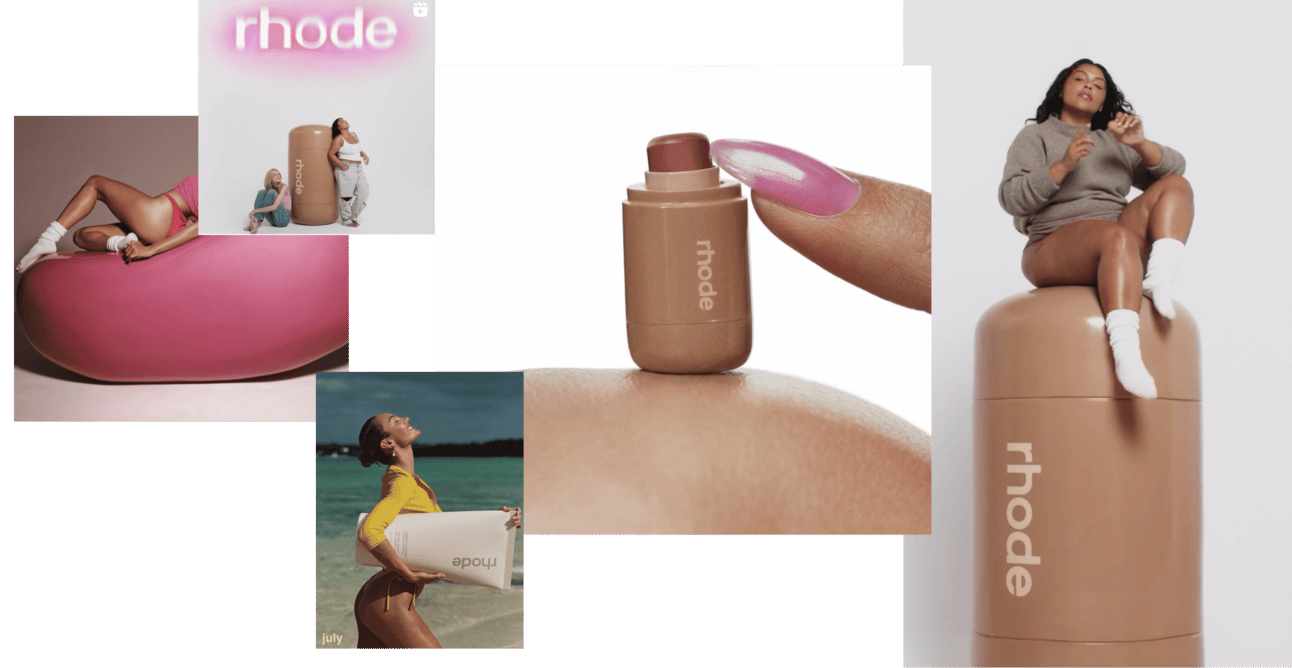
Big trend: using tiny or oversized elements in beauty or fashion products to create impressive campaigns. Our brains are intrigued by anything abnormal. This approach has been around forever—unexpected or distorted elements capture attention and leave lasting impression.
Rhode uses this constantly. Giant products. Tiny products. Exaggerated scale creates "wow effect."
Advertising shots matter significantly. Each product color builds association with particular flavor. Already iconic "Piggy Pink" demonstrates this. The color isn't just aesthetic choice. It's flavor communication through visual language.

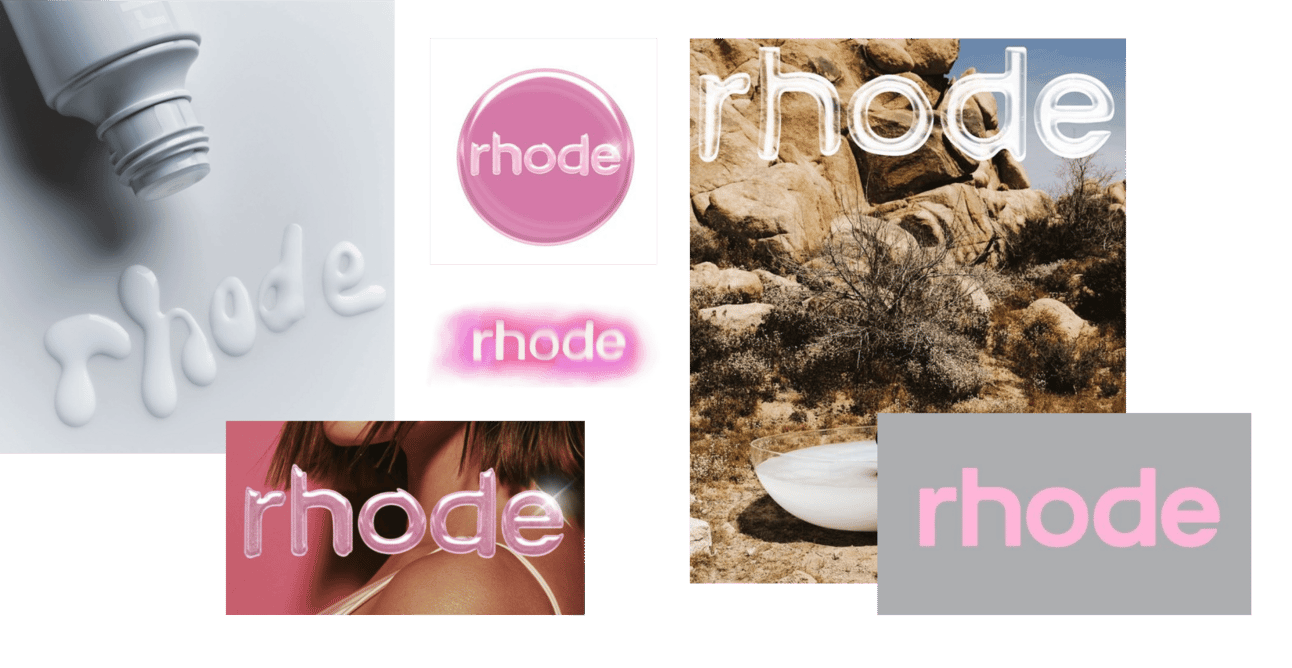
Small design trick: slightly modify logo for new campaigns. Logo remains similar across instances but has different effects applied, creating atmosphere of something new and upcoming. This maintains brand recognition while signaling freshness.
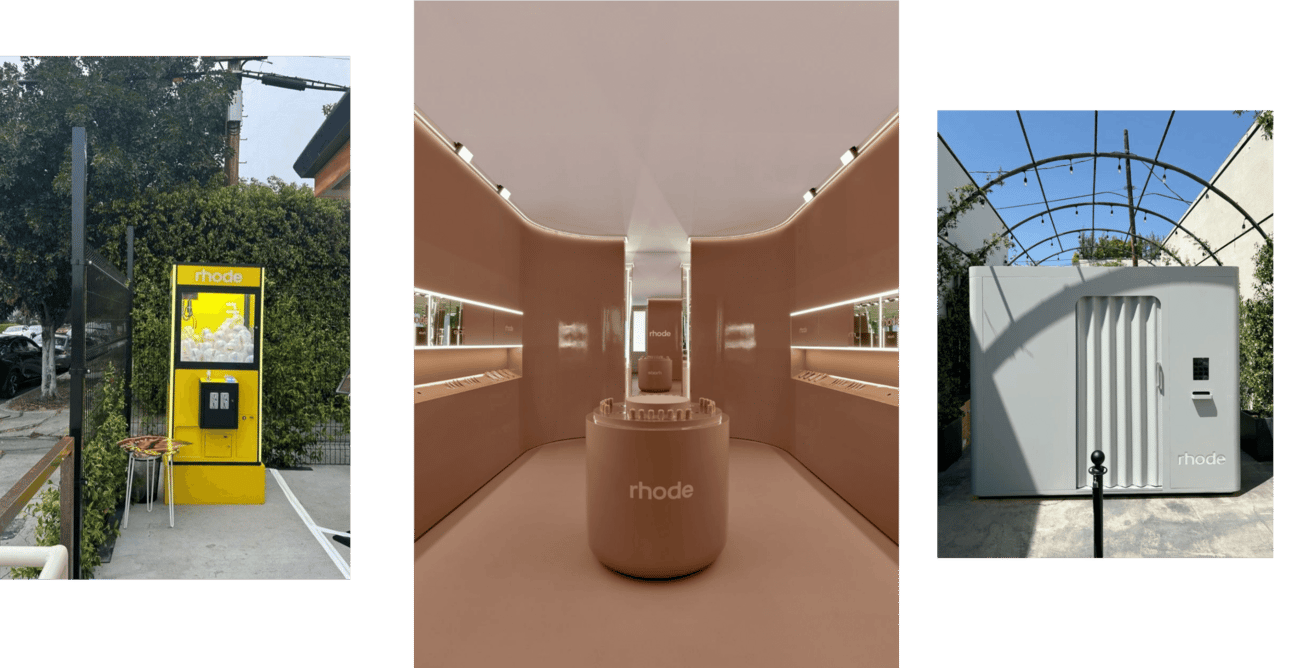
Pop-ups as experience architecture, not just retail
Pop-up events aren't new. Still effective because people love to look good and hang out with others. Temporary events create buzz that lasts online long after physical event ends.
Investment in short-term pop-up can generate serious returns if executed well. Strategy: invest in cool idea first, then watch it go viral through user-generated content. Rhode's pop-ups aren't just product sales locations. They're Instagrammable experiences designed for content creation. Every corner, every detail, every installation optimized for photos and videos. Customers become content creators. Content creators become brand advertisers.
The pop-up isn't the end goal. The social media content generated FROM the pop-up is the goal. Physical event is just catalyst for digital amplification.
Testing brand strength independent of celebrity
Notice: we intentionally avoided featuring Hailey Bieber photos in this analysis. Testing if creativity and captivation stand on their own without relying on celebrity face.
Without strong team who invent and implement all ideas into life, influencer's fanbase could dissipate after just one product unpack. Rhode's success comes from execution quality, not just celebrity attachment.
The real question: Does Rhode's creative execution create independent brand equity strong enough to survive without Bieber's constant presence? Or is the sophisticated design language just expensive scaffolding around celebrity gravitational pull?
We don't have answer yet. Brand is too young. But the creative execution is strong enough to study regardless of outcome.
Replicable patterns from rhode's strategy
- Packaging recognizability through strategic detail modification. Diagonal cap creates instant recognition without full custom bottle mold. One distinctive detail appearing in every user-generated photo does all recognition work. This is cost-efficient iconography.
- Merchandise as advertising tool customers pay for. Phone case turns customers into walking billboards they're happy to be. Cosmetic kits stimulate travel content creation. The merchandise isn't promotional expense. It's revenue-generating advertising that customers fund themselves.
- PR kits as content creation toolkits, not sample boxes. Influencer kits designed for "aha moment" unboxing. Keepable packaging, story-specific themes, small content creation tools (stickers, props). Goal isn't showcasing product benefits. Goal is enabling audience participation in brand narrative.
- Launch ecosystems, not product announcements. Each product gets full thematic world (Strawberry launch: red Corvette, giant strawberry box, themed donuts, stickers). Coherence across product, packaging, campaign imagery, influencer tools. Everything tells same story through different mediums.
- Pop-ups designed for content generation, not just sales. Physical experience optimized for Instagram/TikTok content creation. Every installation, every corner photo-ready. Goal: digital amplification through user-generated content, not just physical foot traffic.
Rhode's eight-figure launch in 11 days came from packaging design creating instant recognizability (diagonal cap), merchandise strategy turning customers into advertisers (phone case phenomenon), and PR kits functioning as influencer content creation toolkits rather than sample boxes. Whether brand survives long-term without Bieber's celebrity pull depends on whether creative execution built independent brand equity or just expensive scaffolding around celebrity gravity.
July 11, 2024
.png)