1. Platform-first strategy: build distribution before creating products
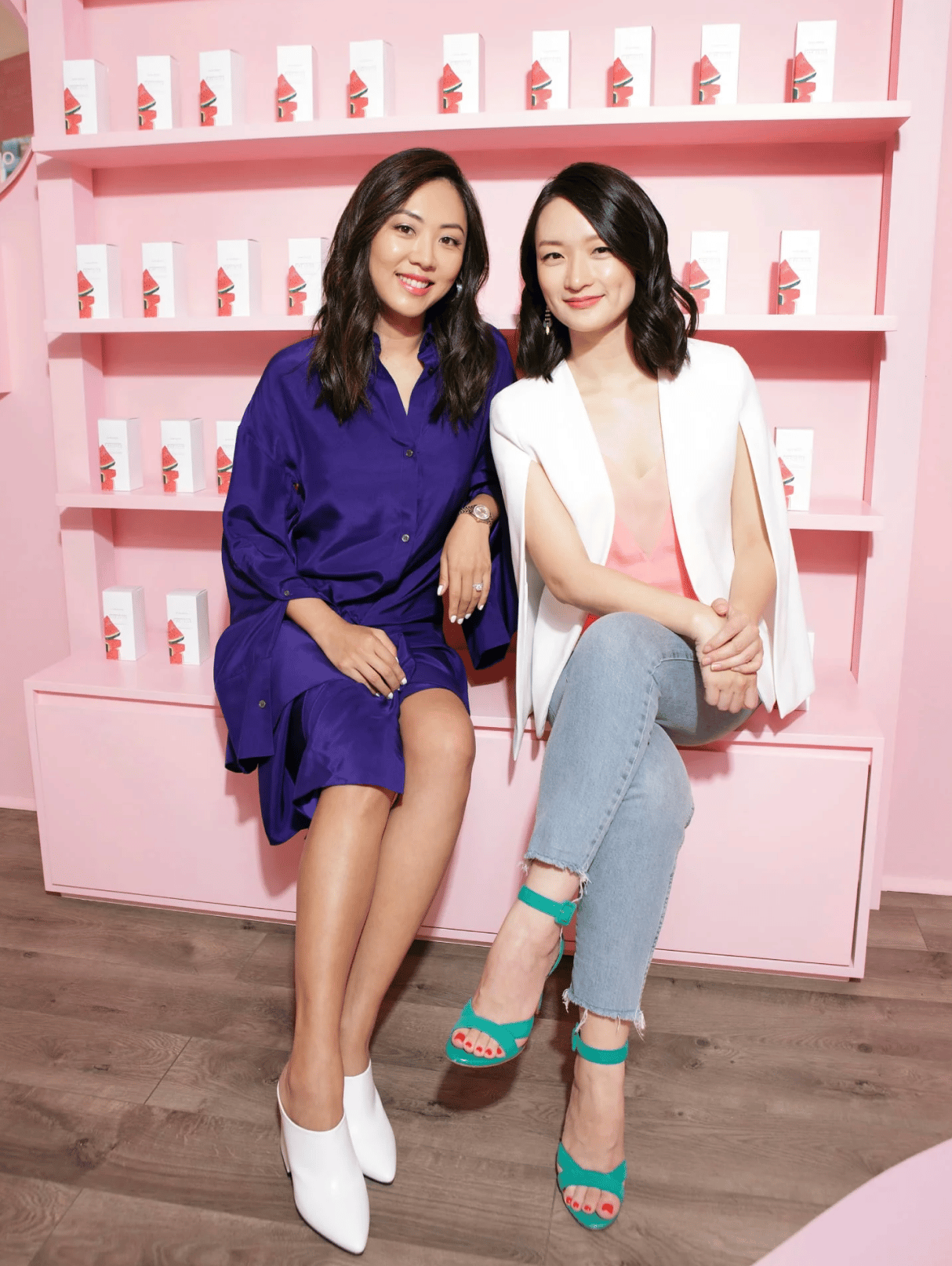
Christine Chang and Sarah Lee left L'Oréal Korea in 2014 with $50K between them. They had marketing skills from L'Oréal's entrepreneurial environment. They understood operations and supply chains. That gave them a head start most beauty founders don't have.
But here's the smart part: they didn't launch products immediately. They launched a curated K-beauty platform. Eight brands on the board initially. The platform was profitable from month three.
Scroll back through their Instagram. You can watch the evolution. First three years: promoting other brands, growing a fan community. Then: launching their own products in 2017 once they had distribution and audience.
Chang and Lee saw K-beauty as an emerging trend in the US market. In 2014, sheet masks were still a novelty concept in America. They positioned themselves at the distribution layer first, then moved up the value chain to product creation once they had proven demand and audience.
Platform-to-product is less risky than product-to-platform. You build audience with other people's inventory, then launch your own once you know what sells.
2. Fruit-inspired products: emotional hook meets functional delivery
Glow Recipe debuted with Sephora in 2017. First product: Watermelon Glow Jelly Sheet Mask at $8. It sold out multiple times on launch. Beauty editors and skincare enthusiasts gave rave reviews.
That single product launch generated $4 million in earned media value (social media engagement metric). Compare that to $869K the year prior when they only operated as a retailer. That's a 4.6x jump from one product.
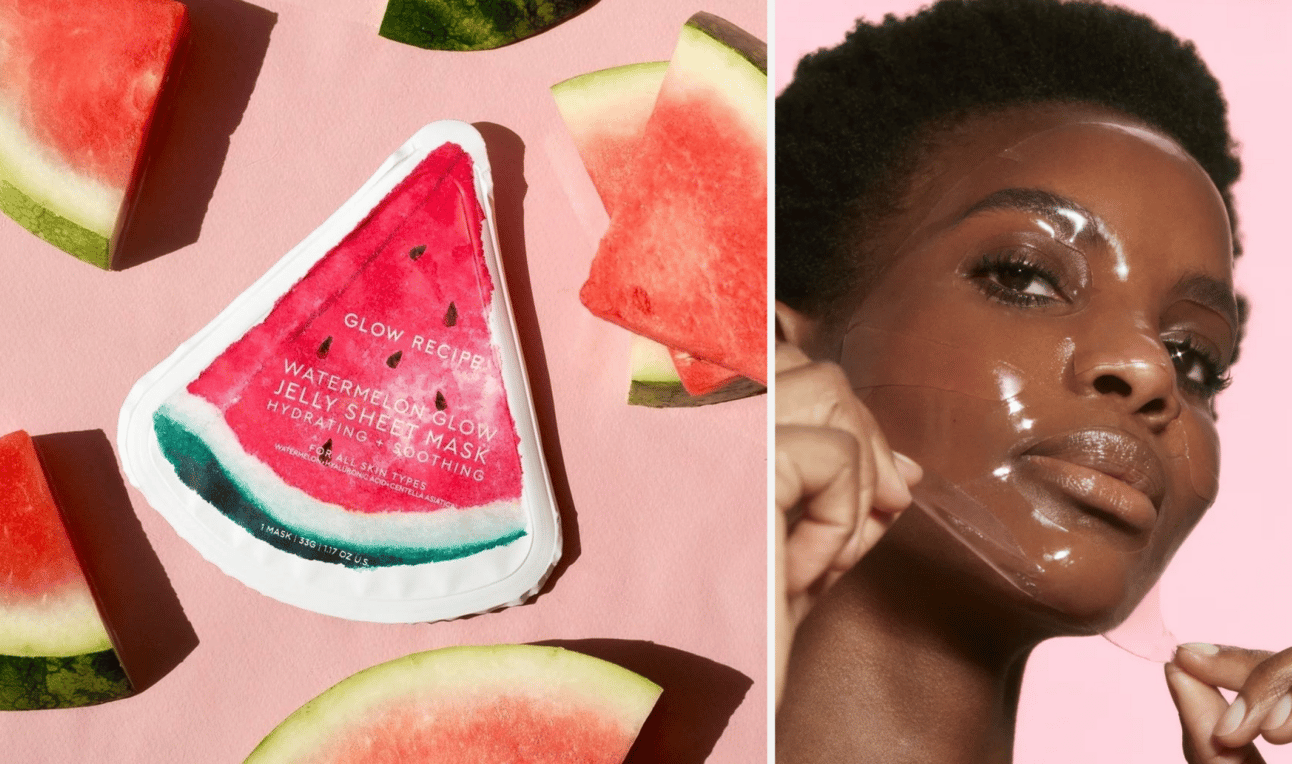
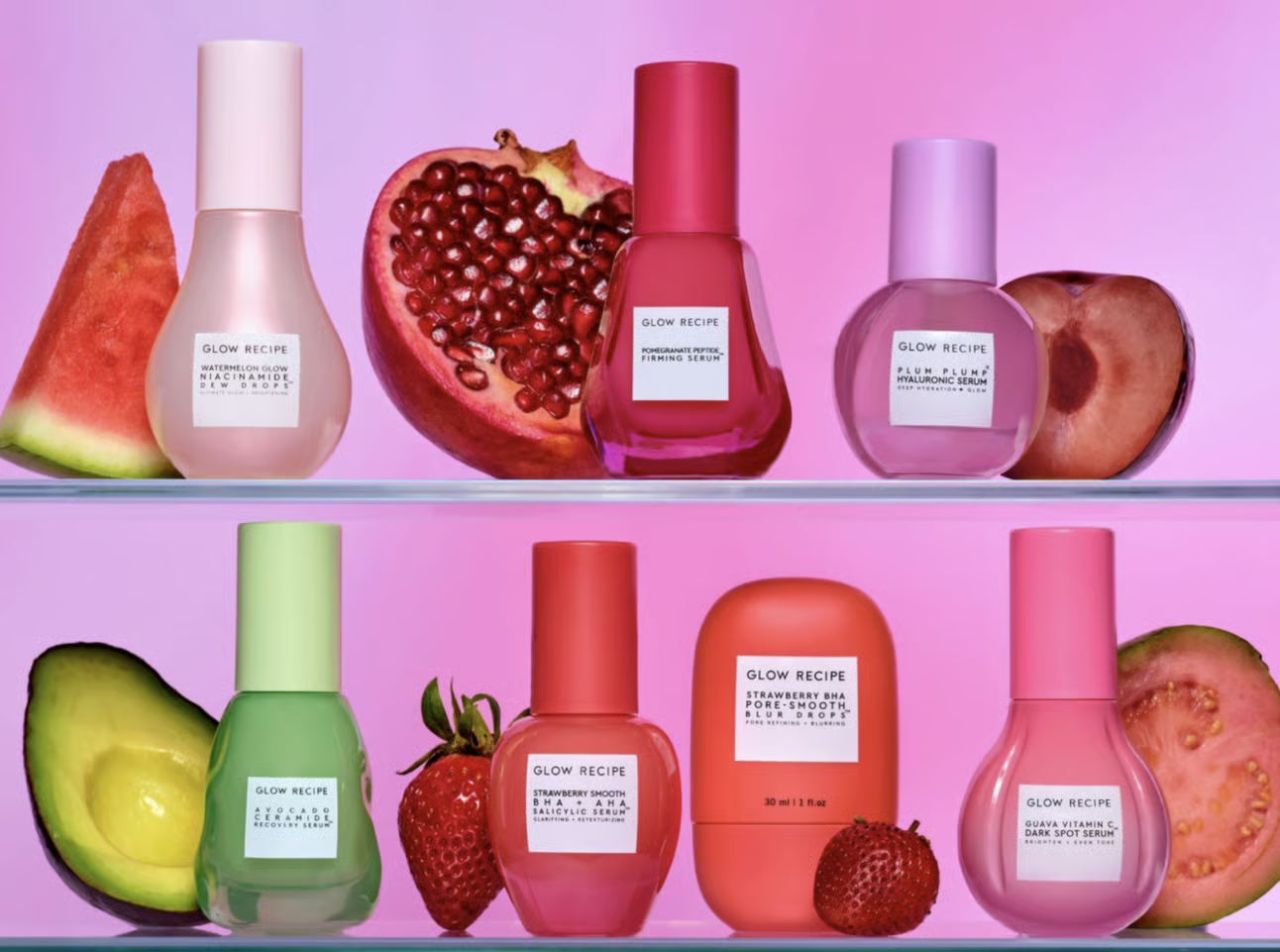
The strategy is deceptively simple: combine emotional component (fruit-inspired aesthetics) with functional edge (science-backed ingredients). Visual and sensorial hook reinforces efficacy promise.
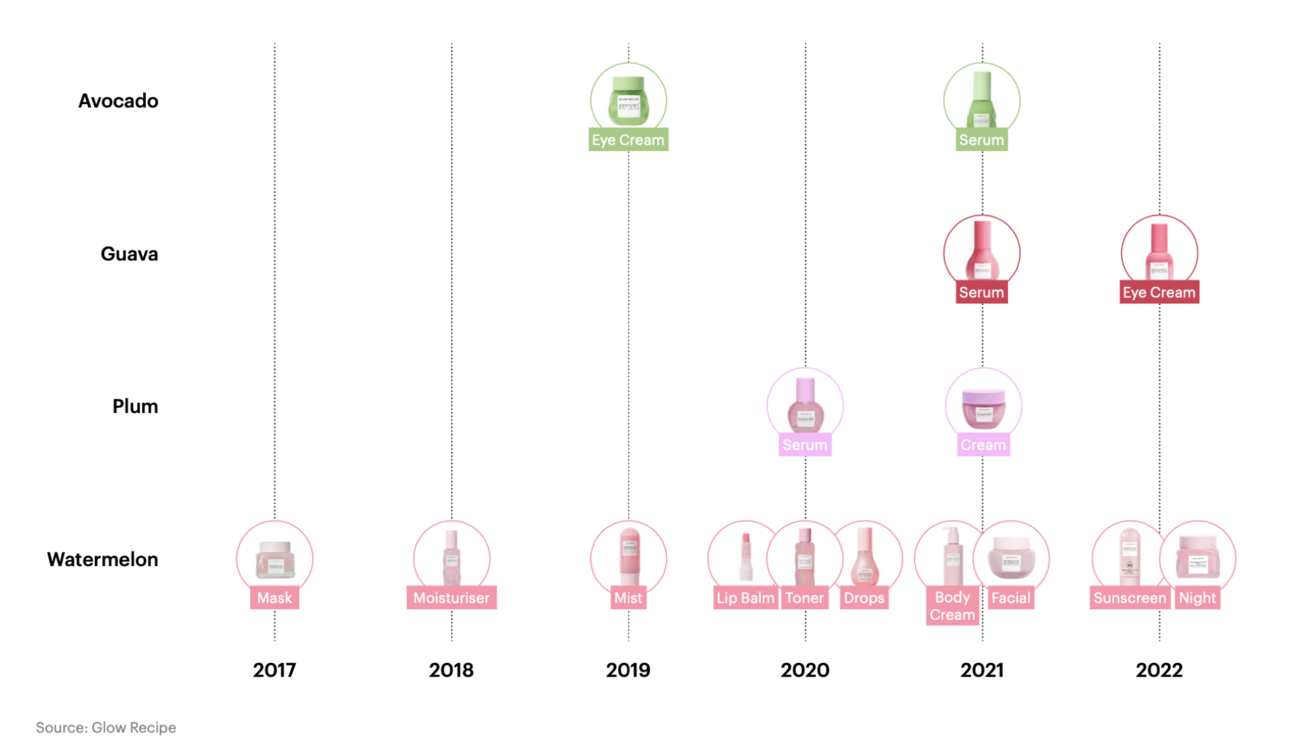
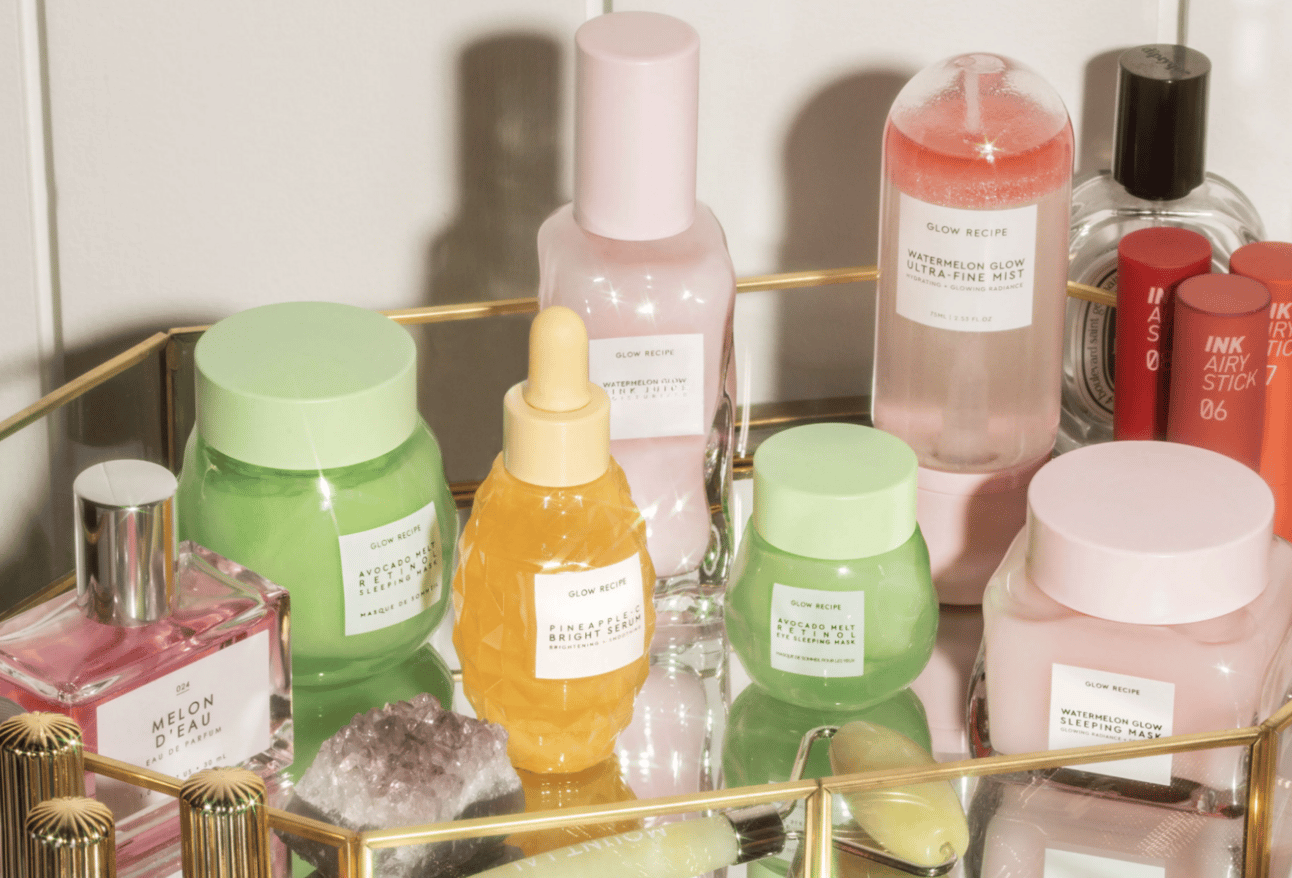
Look at the Watermelon scent table. Fragrance fans want to try every product in the line. When a new fruit drops (star-fruit, plum, whatever), it creates event-level excitement. People collect the scents. The fruit theming isn't just branding. It's product architecture that drives repeat purchase across the line.
Emotional purchase driver (it smells like watermelon, the packaging is cute) justifies the functional investment (niacinamide, hyaluronic acid, whatever active ingredient). Both layers working together.
Sarah Lee: "We are always looking for the next innovative superfruit or ingredient to bring to our community."
3. Design products for social virality before finalizing formula
Early packaging might have been ready-made molds, but the brand DNA was there from the start. The Watermelon Sleep Mask had custom wavy glass packaging from day one. Before launch, the founders did absurd iteration numbers:
- 1,620 formula reviews (sleep mask was new category at the time)
- 49 packaging updates
- 8 trips to Korea to review production process
That's not normal. Most brands do maybe 3-5 packaging iterations.
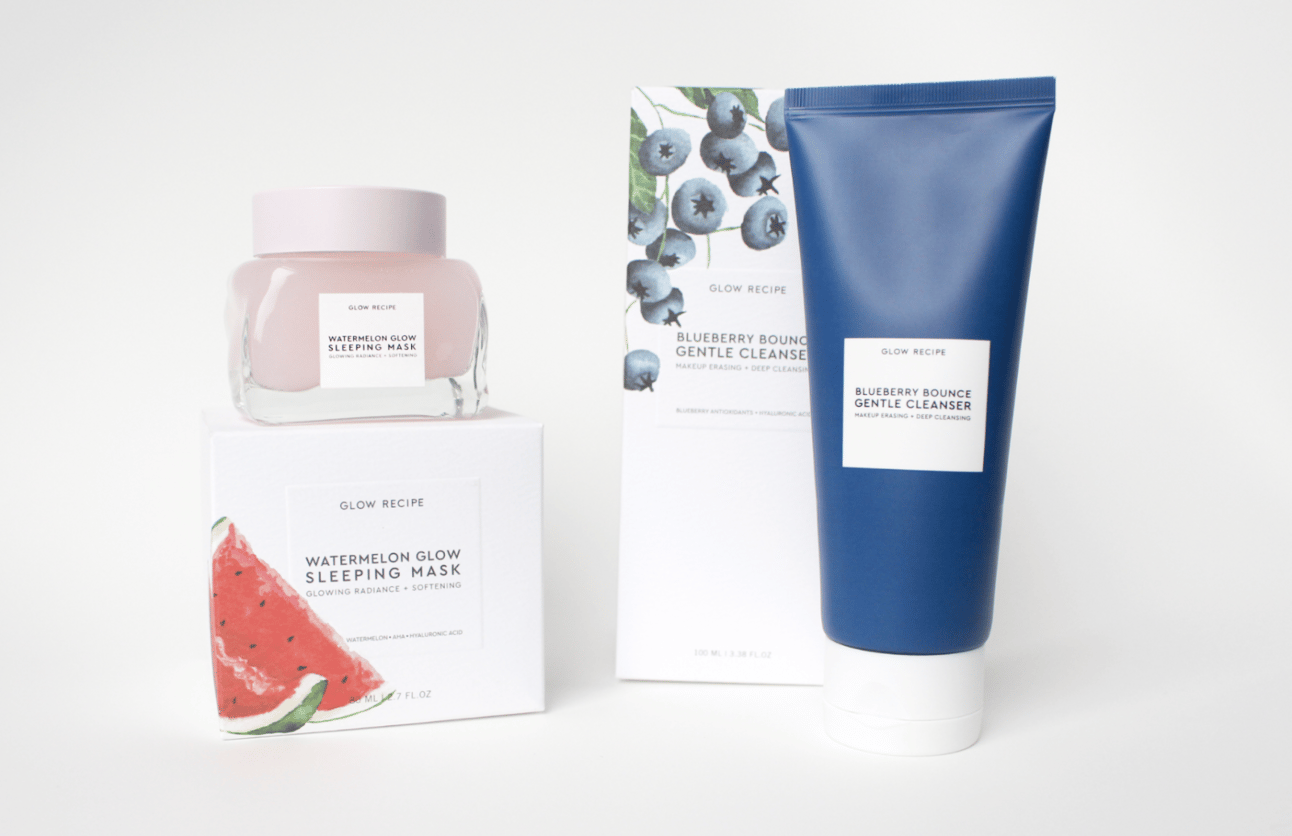
Sarah Lee said it clearly: "The go-to-market strategy is established before the products are finished." They keep two phrases in mind during development: "scroll-stopping" and "shelf-grabbing." How will this look on Instagram before we finalize the formula?
Most brands think: formula first, packaging second, social strategy third. Glow Recipe inverts that. Social performance is designed into the product from the beginning.
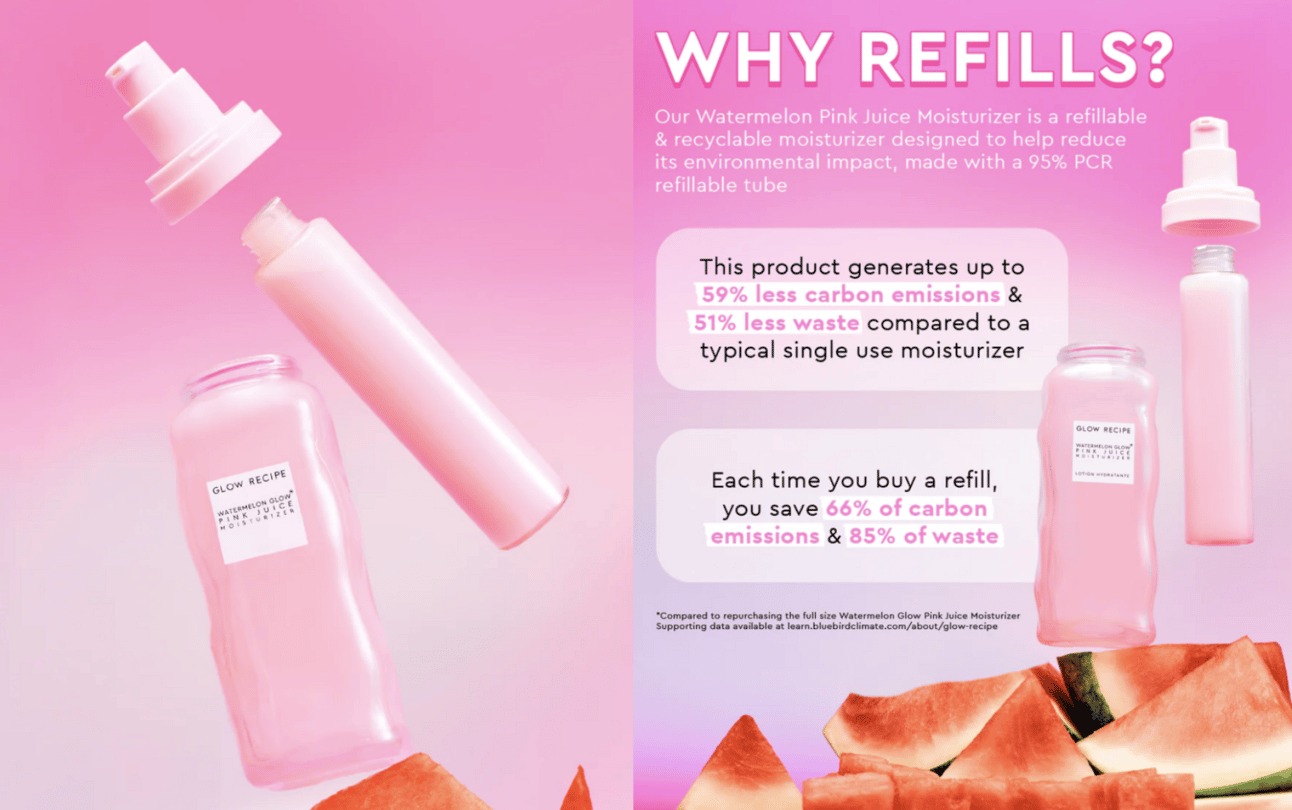
Glow Recipe integrates recyclable glass packaging into its products, offering an elevated aesthetic at affordable prices, usually $50 or less. Teaming up with TerraCycle, the brand introduced a no-waste recycling program. In 2021, they debuted their first refillable product, the Plum Plump Hyaluronic Cream. Customers can request a recycling envelope to easily collect and recycle their Glow Recipe products.
First product launch (Watermelon Mask) generated $4M in earned media value compared to $869K the prior year as retailer-only. That's 360% increase in social engagement from one strategically designed product.
4. Organic influencer relationships built through individual outreach
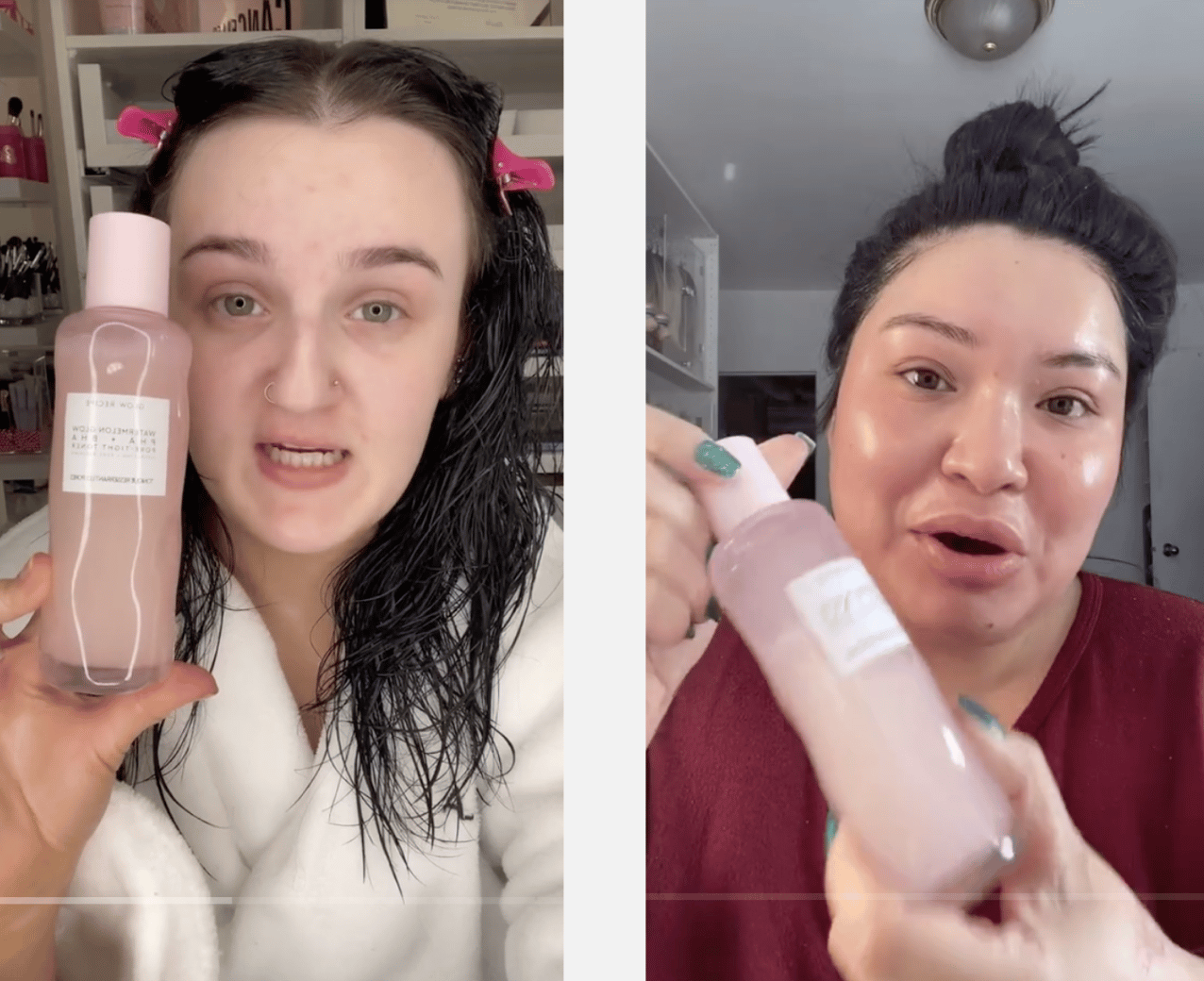
Embracing the glow gang mentality, Glow Recipe's community flourishes with influencers who align with the brand's philosophy and story. Yet, the beauty market is saturated, so how does one stand out and capture their excitement? The secret lies in keeping it organic.
In the early days, Sarah and Christine dove into individual outreach, personally following influencers to understand their skincare concerns and beauty appreciations. Two intense weeks crafting 600 personalized emails – 300 per each. The result? A remarkable 30% response rate from cold emails, some even meeting for coffee during travels. Glow Recipe nurtured a network where friends supported one another.
Glow Recipe hosted brand trip for influencers and boost sales in 185%
In Feb 2023, Glow Recipe wowed six mega-creators in Jackson Hole, testing the Plum Plump Moisturizer against Wyoming's winter for four days. It wasn't just promo – a lavish experience with spa days and snowmobiling splashed across social media.
Despite the cost, Glow Recipe nailed it. A 25% Amazon traffic boost, a $3 million media surge, and the Plum Plump cream topping sales charts with an 80% jump. The travel-size cream on Amazon saw a 185% sales surge.
Glow Recipe's influencer game is top-tier, emphasizing real connections without paying for the trip.
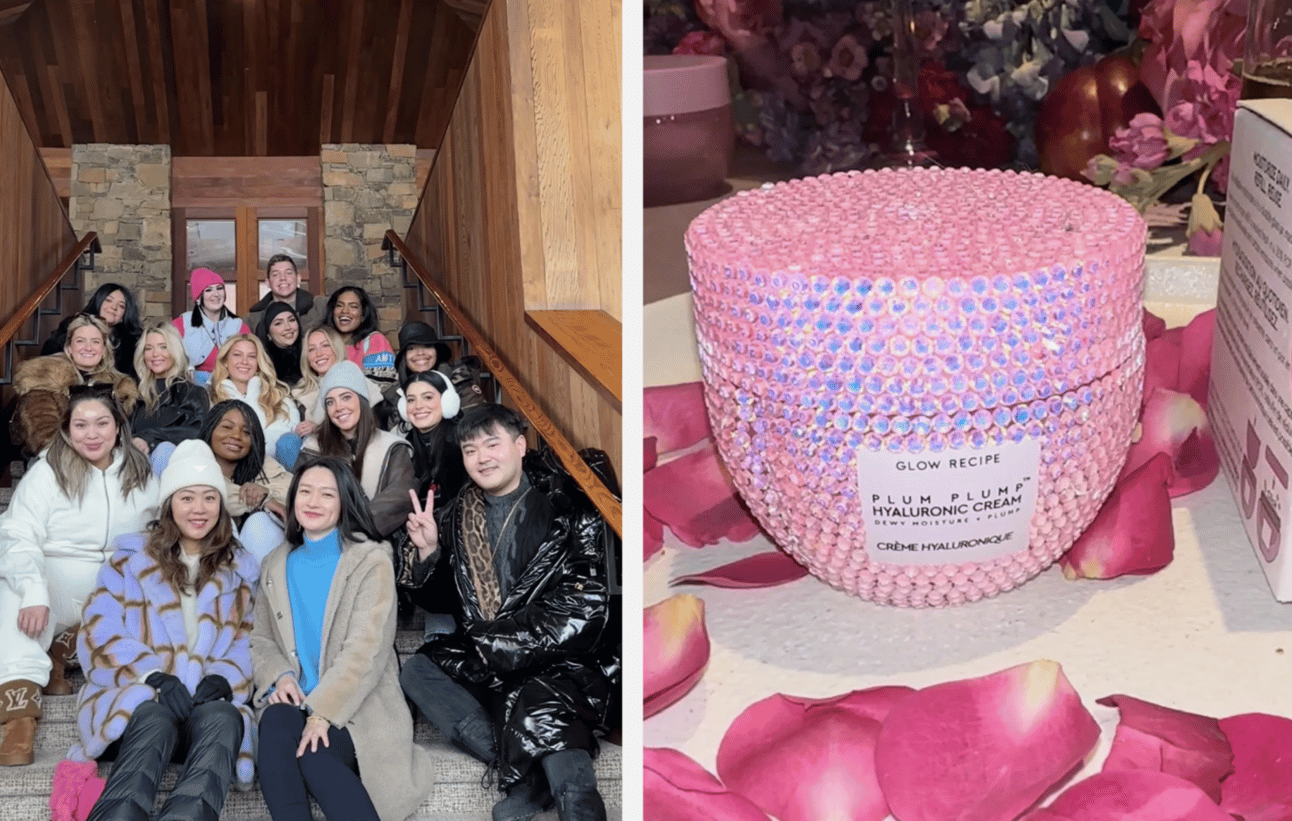
Lee Chong: “There was no contract for the guests, Chong said, noting that everyone agreed on “organic support” and that the brand “just wanted to see what content would come from [the trip].
5. Cultural alignment through casting and campaign decisions
Glow Recipe taps into feel-good macro trends like diversity while riding the wave of micro-trends, such as permanent TikTok videos. Brands that authentically stand for their beliefs earn audience trust.
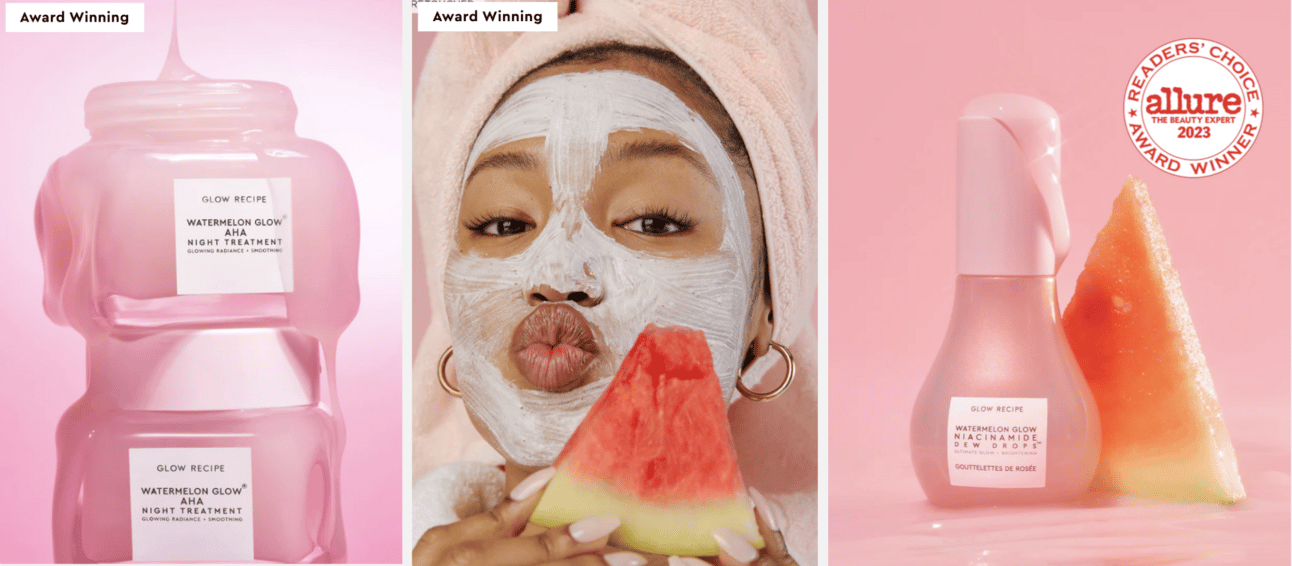
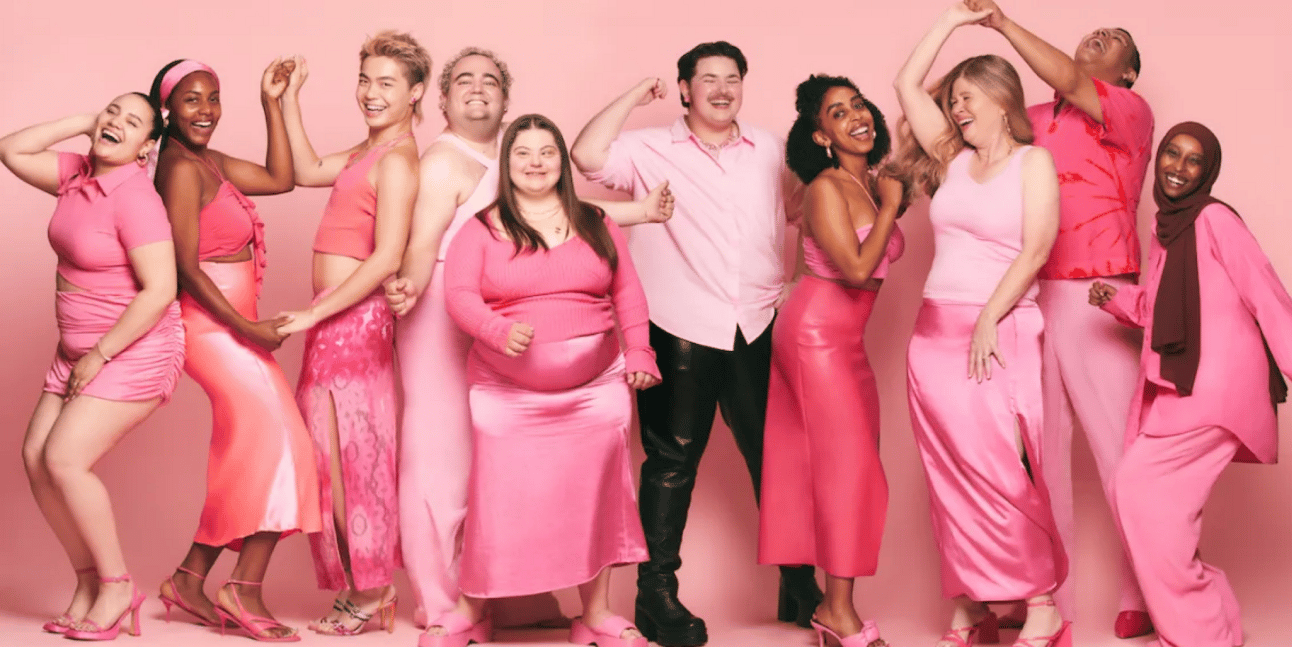
Glow Recipe's "Dew You Anonymous Open Casting" flipped the beauty industry script, selecting models for the Watermelon Glow Niacinamide Dew Drops campaign solely based on personality, not looks. With 2,500+ applicants responding to the Instagram call, the brand, committed to real beauty and clean formulas, partnered with a DEI specialist. They stripped applications of names and ages for impartiality. Out of the diverse pool, 10 passionate Dew Drops fans emerged as the fresh faces of the campaign.
Glow Recipe not only embraces but transforms significant macro trends into creative campaigns that truly stand out, challenging conventional beauty standards.
Pattern recognition: what glow recipe understood early
- Bet on cultural trends before they peak. K-beauty and sheet masks were emerging concepts in 2014 US market. Chang and Lee positioned at the distribution layer (curated platform) before the trend exploded. By the time sheet masks were mainstream, they had audience and credibility to launch products.
- Design full sensorial experience, not just functional product. Rational layer: innovative formula, science-backed, result-based. Emotional layer: fruit ingredients, jelly texture, pleasant scent, Instagram-ready packaging. Both working together create collection behavior and repeat purchase.
- Scroll-stopping packaging is non-negotiable from day one. Custom packaging from first launches. 49 iterations before finalizing. Go-to-market strategy established before formula is finished. Social virality designed into product, not added later. Plus refill options for sustainability credentials.
- Organic community support outperforms paid advertising. 600 personalized emails with 30% response rate beats mass influencer seeding. Jackson Hole experience created $3M media value through genuine enthusiasm. People believe people. Paid posts guarantee nothing.
- Cultural alignment through operational decisions, not just messaging. Anonymous casting stripped of names and ages proves commitment to diversity. Partnering with DEI specialist shows seriousness. Words are cheap. Process changes demonstrate values.
Signal from Nois: Glow Recipe's $300M revenue came from strategic cultural positioning (entering K-beauty trend early), designing products for social virality before finalizing formulas, and building genuine influencer relationships through experience rather than transactions. Platform-first strategy de-risked product launch by building audience before creating inventory.
April 5, 2024
.png)